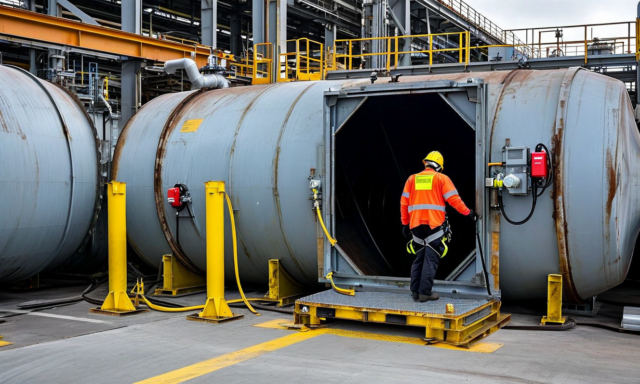
Permit-required confined space incidents are among the most reliably preventable fatalities in general industry. The OSHA standard at 29 CFR 1910.146 has been in place since 1993. The engineering controls, administrative procedures, and rescue requirements are well-understood and well-documented. Yet confined space fatalities continue to occur at a significant rate in manufacturing facilities, and the investigation pattern is consistent: the facility had a written confined space program, and the program was not followed at the time of the incident.
The gap between program existence and program execution is the central problem in confined space safety. Most citations under 1910.146 are not written for facilities without programs - they are written for facilities where the program was inadequately communicated, inadequately supervised, or inadequately updated as the inventory of permit-required spaces changed. This article addresses the specific program requirements that most commonly fail in practice and why they fail.
Permit-Required Space Identification: The Dynamic Problem
The first requirement of a confined space program is identifying all permit-required confined spaces in the facility. Under 1910.146(c)(1), employers must identify all confined spaces in the workplace and evaluate them to determine which are permit-required. A confined space requires a permit if it contains or has a potential to contain a serious atmospheric hazard, has a potential for engulfment, has an internal configuration that could trap or asphyxiate an entrant, or contains any other recognized serious safety or health hazard.
The identification requirement is typically satisfied through an initial facility survey that generates a confined space inventory. The problem is that this inventory becomes stale as facilities change. Equipment is added, process changes create new spaces with permit-required characteristics, and temporary configurations - process tanks that are normally sealed but are accessed for cleaning, for example - create permit-required spaces that exist only during specific operations. The permit-required space inventory needs to be treated as a living document updated whenever facility changes could affect confined space status, not as a one-time assessment.
New equipment installation is the most common source of undocumented permit-required spaces in manufacturing facilities. An equipment procurement process that does not include an EHS review for confined space classification at the installation planning stage will routinely add permit-required spaces to a facility without updating the program. Facilities with active capital equipment programs need an explicit confined space classification review as a standard step in equipment installation commissioning.
Atmospheric Testing: The Protocol Failures That Cause Fatalities
Atmospheric testing before entry is among the most fundamental requirements in confined space work, and atmospheric testing failures are among the most common causes of confined space fatalities. The testing requirements under 1910.146(d)(5) specify that the atmosphere of a permit space must be tested for oxygen content, flammable gases and vapors, and potential toxic air contaminants before any authorized entrant enters. The order matters: oxygen content first, then flammability, then toxics.
The atmospheric testing failures that cause fatalities in facilities with written programs fall into three patterns. First, testing performed from outside the space without testing at the depth where work will occur. A vessel that tests clean at the manway may have an oxygen-deficient or toxic atmosphere at the bottom. Testing must be performed throughout the space, including at the level and location where the entrant will be working.
Second, testing performed with inadequate or uncalibrated equipment. Confined space atmospheric monitors require regular calibration against certified gas standards. A monitor that was calibrated six months ago and has been used in dusty industrial conditions may not produce reliable readings. Program documentation should include calibration frequency requirements and pre-use bump testing requirements for atmospheric monitors. Pre-use bump tests - confirming that the sensor responds to a known concentration of the target gas - are a practical check for sensor degradation that calibration schedules alone do not catch.
Third, failure to continuously monitor atmospheric conditions during entry work. Pre-entry testing establishes baseline conditions but does not account for changes during the work. Pipe cleaning that disturbs sediment can release hydrogen sulfide. Welding in an enclosed space depletes oxygen and generates carbon monoxide and fumes simultaneously. Continuous monitoring requirements during entry work are explicit in the standard at 1910.146(d)(5)(ii) but frequently omitted from operational permit requirements in practice.
The Attendant Requirement: What "Constant Contact" Actually Means
The entry permit requirements under 1910.146 include a station outside the permit space for an attendant who maintains contact with authorized entrants and coordinates emergency response if needed. The attendant requirement generates citations in several recurring patterns:
Attendants who leave the duty station during entry work, even briefly, violate the standard regardless of the reason for the absence. The attendant cannot enter the space to assist a distressed entrant - that is the rescue team's function - and cannot leave the station for any reason without initiating a restricted entry protocol that removes entrants from the space. Facilities that train attendants on these requirements in initial training but do not reinforce them in job hazard analyses and pre-entry briefings consistently see attendant protocol failures during enforcement inspections.
Attendants who are assigned additional duties incompatible with maintaining continuous contact violate the standard even when the additional duties seem minor. An attendant tasked with answering phones, signing in visitors, or performing light maintenance while standing near the confined space entry is not performing the attendant function. The attendant role is dedicated during any open permit: no other work assignments permitted.
Rescue and Emergency Services: The Planning Gap
The rescue and emergency services requirements at 1910.146(k) require employers to implement procedures for summoning rescue and emergency services, for rescuing entrants from permit spaces, for providing necessary emergency services to rescued employees, and for preventing unauthorized personnel from attempting a rescue. The last requirement - preventing unauthorized rescue attempts - reflects one of the consistent patterns in confined space fatalities: rescuers who enter without proper equipment to help a distressed entrant become additional victims.
Non-entry rescue requirements under 1910.146(k)(3) specify that retrieval systems be used when an authorized entrant in a permit space becomes incapacitated, unless a retrieval system would increase the overall risk of entry or would not contribute to the rescue of the entrant. The retrieval system requirement means that entrants must wear retrieval equipment - typically a chest or full-body harness with a retrieval line - during all permit-required entries where non-entry rescue is feasible. Facilities that train entrants to wear harnesses but do not ensure the retrieval line is rigged and attended before entry create a false rescue capability that would fail in an actual emergency.
Contractor Coordination Requirements
Manufacturing facilities that use contract maintenance workers for confined space entry are subject to coordination requirements under 1910.146(c)(8) through (c)(9). The host employer must inform the contractor about permit-required spaces and the elements of the permit program, and the contractor must coordinate with the host employer on the space's entry conditions, potential hazards, and emergency response procedures.
The most common coordination failure is verbal briefing without documentation. A verbal briefing that the host employer's safety manager believes was provided but that the contractor's crew cannot specifically recall creates an enforcement problem when a compliance officer asks for evidence that the required information was communicated. Written coordination documentation - a signed acknowledgment that the contractor crew received the required briefing on each permit-required space they will enter - provides the evidentiary record that verbal briefings cannot.
SafeSiteX's hazard control module includes a confined space permit tracking workflow that manages pre-entry checklists, atmospheric test records, attendant assignments, and rescue plan documentation in a digital format that is accessible during entry and reviewable during audits. Integration with the corrective action tracking system ensures that hazards identified during entry work are documented and addressed. Questions about permit-required confined space program management? Contact us at [email protected].